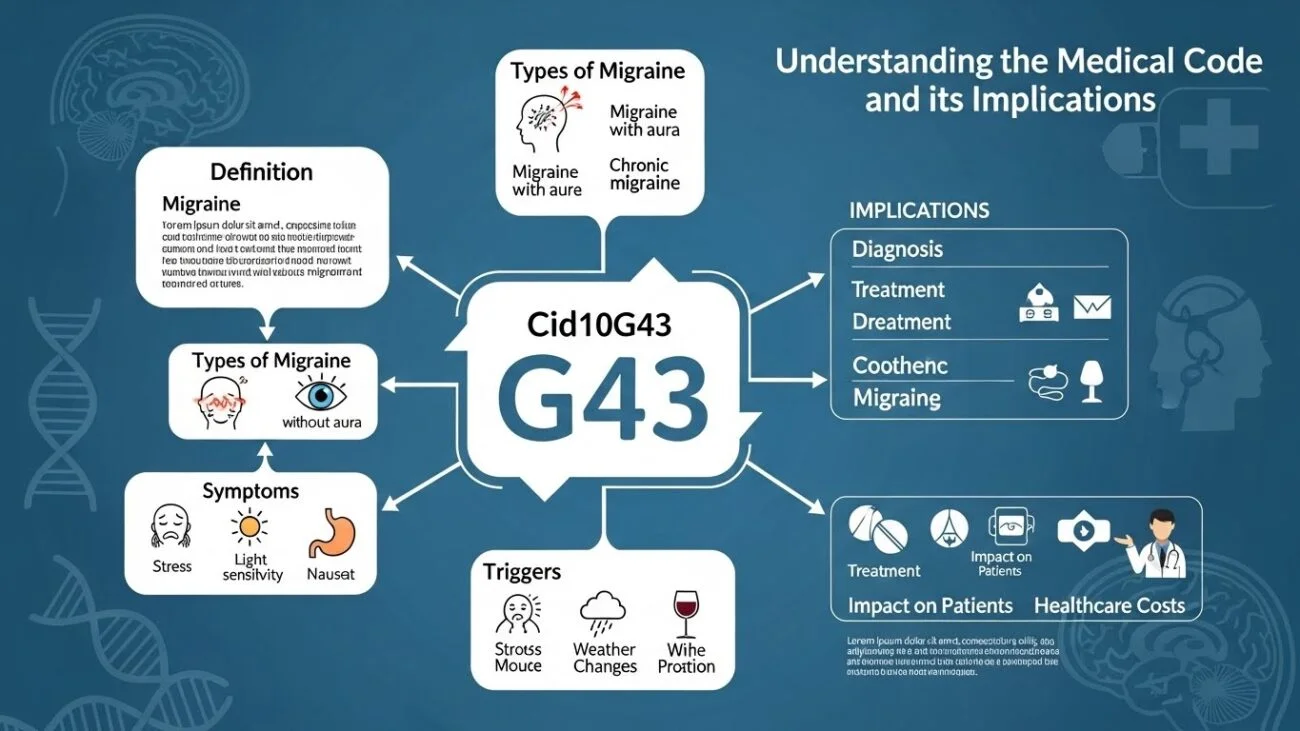
Introduction to cid10g43
Understanding cid10g43 is essential for professionals navigating the complex landscape of modern healthcare. As a specific code recognized within the International Classification of Diseases (ICD), it serves as a vital tool for accurately categorizing and documenting various medical conditions. The significance of cid10g43 lies not only in its specific application but also in its capacity to enhance communication among healthcare providers, insurers, and researchers.
The origins of cid10g43 can be traced back to the need for a standardized system that allows for consistent recording and reporting of diseases. This code belongs to the broader ICD-10 coding system, which was developed by the World Health Organization (WHO) to promote a comprehensive classification of health issues across the globe. Each alphanumeric code in this system reflects a particular diagnosis or condition, enabling healthcare providers to streamline their processes and improve patient care.
In today’s healthcare landscape, the relevance of cid10g43 cannot be overstated. As a key component of electronic health records (EHRs) and billing processes, accurate use of this code ensures that healthcare services are appropriately billed, reimbursed, and analyzed for trends. Furthermore, cid10g43 plays a pivotal role in public health research, contributing to the identification of disease patterns and informing policy decisions. Without a proper understanding of codes like cid10g43, stakeholders may struggle to navigate the intricacies of healthcare delivery, leading to inefficiencies that can impact patient outcomes.
Given the importance of accurate coding, familiarizing oneself with cid10g43 is not merely advantageous but necessary for anyone engaged in healthcare administration, clinical practice, or research. This foundational knowledge will provide a strong basis for further exploration of the implications and applications of this critical code in subsequent sections.
Applications and Use Cases of cid10g43
The cid10g43 classification, which refers to a specific diagnosis code, plays a crucial role in various sectors, particularly in healthcare and insurance industries. It facilitates standardization within medical records and billing systems, thereby enhancing workflow efficiency. In practices such as coding, epidemiology, and healthcare analytics, cid10g43 serves as a tool to categorize conditions, facilitating smoother communication among providers, payers, and patients.
One prominent application of cid10g43 is seen in clinical research, where the classification aids in identifying and analyzing patient populations. Researchers can utilize these codes to study the prevalence and impact of certain conditions across demographic groups, leading to more targeted health interventions. For instance, case studies have evidenced the effectiveness of cid10g43 in identifying trends in chronic illnesses, which enable healthcare professionals to allocate resources effectively.
Moreover, cid10g43 plays a pivotal role in insurance claims processing. When claims are submitted using these standardized codes, it simplifies the review and approval process. Insurance companies can quickly ascertain the validity and necessity of treatments or interventions, ensuring that services rendered are appropriately reimbursed. This ensures that healthcare providers are compensated fairly and promptly, further underscoring the significance of cid10g43 in maintaining economic stability within the healthcare ecosystem.
Additionally, in public health monitoring, cid10g43 is used to track disease outbreaks and health trends over time. By analyzing data categorized under this classification, health departments can swiftly respond to emerging health concerns, effectively strategizing their public health initiatives. The versatility of cid10g43, therefore, not only streamlines administrative functions but also enhances the efficacy of patient care and public health responses.

Challenges and Considerations Related to cid10g43
The use of cid10g43, like many specialized classifications, presents several challenges and considerations that practitioners should take into account. One significant hurdle is the potential for misconceptions surrounding its application and relevance. Many professionals may inadvertently conflate cid10g43 with similar classification systems, leading to inconsistencies in diagnosis and treatment planning. It is crucial for practitioners to have a clear understanding of the specific parameters and definitions associated with cid10g43 to avoid misinterpretation.
Another challenge is the inherent limitations of cid10g43 within certain contexts. For instance, while cid10g43 provides a standardized approach to categorizing certain conditions, it may not encapsulate the nuanced variations present within a population. This can lead to oversimplified perceptions of complex health issues, resulting in gaps in care or oversight of critical factors that influence patient outcomes. Thus, professionals must remain vigilant about these limitations while employing cid10g43 in their work.
In addition, industry-specific hurdles can complicate the practical implementation of cid10g43. Different sectors may have distinct standards and practices that affect how cid10g43 is utilized. For example, the healthcare requirements in research settings may differ significantly from those in clinical settings. Furthermore, regulatory changes can also impact the efficacy and acceptance of cid10g43, necessitating ongoing education and adaptation among healthcare providers.
Overall, while cid10g43 offers a structured framework for understanding certain classifications, it is essential for practitioners to be aware of the associated challenges. Successful integration into practice depends on identifying these challenges, addressing misconceptions, recognizing limitations, and navigating industry-specific demands to optimize patient care.
Future Trends and Developments in cid10g43
The landscape surrounding cid10g43 is continuously evolving, particularly as advancements in technology and research expand our understanding of this classification. As healthcare professionals and researchers probe deeper into the applications of cid10g43, multiple emerging trends become apparent. For instance, digital health solutions are increasingly being integrated into patient care approaches. This shift aims to enhance the accuracy of diagnoses and treatments while streamlining data collection related to cid10g43 classifications.
Another noteworthy trend is the growing emphasis on personalized medicine. Tailoring treatments based on individual patient data holds immense promise for improving health outcomes. The integration of cid10g43 in electronic health records allows for a more nuanced understanding of various conditions, leading to more effective treatment plans. Furthermore, the rise of artificial intelligence and machine learning in healthcare feels particularly significant. These technologies may lead to predictive analytics that can refine the accuracy of cid10g43 coding, facilitating better resource allocation and management in healthcare settings.
Collaboration across interdisciplinary fields is also on the rise. Experts in data analytics, coding, and clinical practice are increasingly working together to refine profound implications of cid10g43, both in terms of treatment efficacy and healthcare policy. This will foster a more robust framework for coding practices and healthcare delivery, essential for navigating future challenges.
Industry experts predict that ongoing research into cid10g43 and related classifications will bring about significant changes in the coding landscape. As new knowledge emerges, healthcare systems might have to adapt swiftly to integrate these insights effectively. In conclusion, the future of cid10g43 is promising, characterized by technological advancements, personalized care approaches, and collaborative efforts across various specialties, providing a fertile ground for continuous improvement in healthcare.